
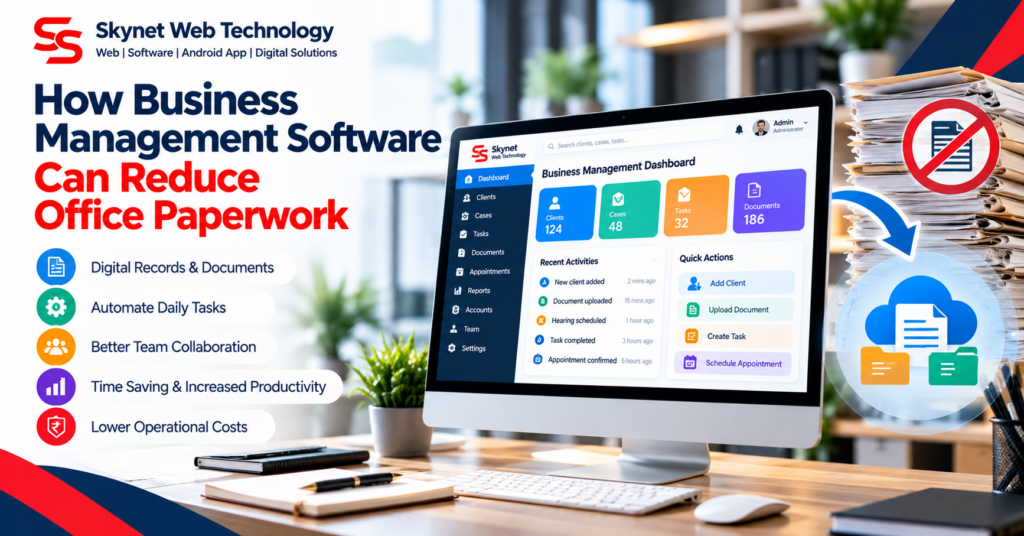
Many offices manage customer details, documents, follow-ups, tasks, and reports across separate files, messages, and spreadsheets. This can make it difficult to find the latest information or see which work needs attention.
Centralise everyday information
A business management system can organise customer records, tasks, documents, appointments, and activity history in one place, with access based on each user’s role.
Make follow-ups visible
Task lists, due dates, reminders, and status indicators help teams identify pending work and reduce the chance of missing an important follow-up.
Improve document handling
Consistent file naming, document categories, upload controls, and links to the relevant customer or matter make records easier to locate. Access permissions should be designed around confidentiality and business responsibilities.
Use reports to support decisions
Useful reports show pending work, completed tasks, workload, and other operational measures. Reports should be accurate, understandable, and limited to information users are authorised to see.
Plan before choosing a system
List the processes that consume the most time, decide who needs access, identify required reports, and consider backup, security, training, and future growth. Software should fit the workflow rather than adding unnecessary complexity.
Skynet Web Technology develops digital solutions intended to help businesses organise their online services and operational workflows. The right solution begins with understanding the real process and the people who use it.